Tamo Harta: Identity for a Brand That Says What Everyone's Thinking
Tamo Harta (Buenos Aires slang for "we're fed up") is an independent apparel brand built around humor, shared frustration, and the kind of honesty people actually want to wear. The project translates everyday language and collective moods into a graphic system across T-shirts, stickers, and brand assets.
When expression becomes product
Tamo Harta — Buenos Aires slang for "we're fed up" — is a brand built around giving voice to everyday frustration through humor. The name is direct, a little defiant, instantly recognizable to anyone who's lived it.
The broader collection included work from other founding designers. The pieces shown here represent my own visual direction and design execution.
Voice before visuals
The foundation of the brand is not an aesthetic. It is an attitude. Before defining colors, typography, or graphics, the work started with articulating what the brand sounds like: direct, witty, empathetic, empowering. Not polite, not neutral, not here to please everyone.
This tone of voice framework became the primary cohesion system across every application, from apparel graphics to sticker copy to the brand manual itself.
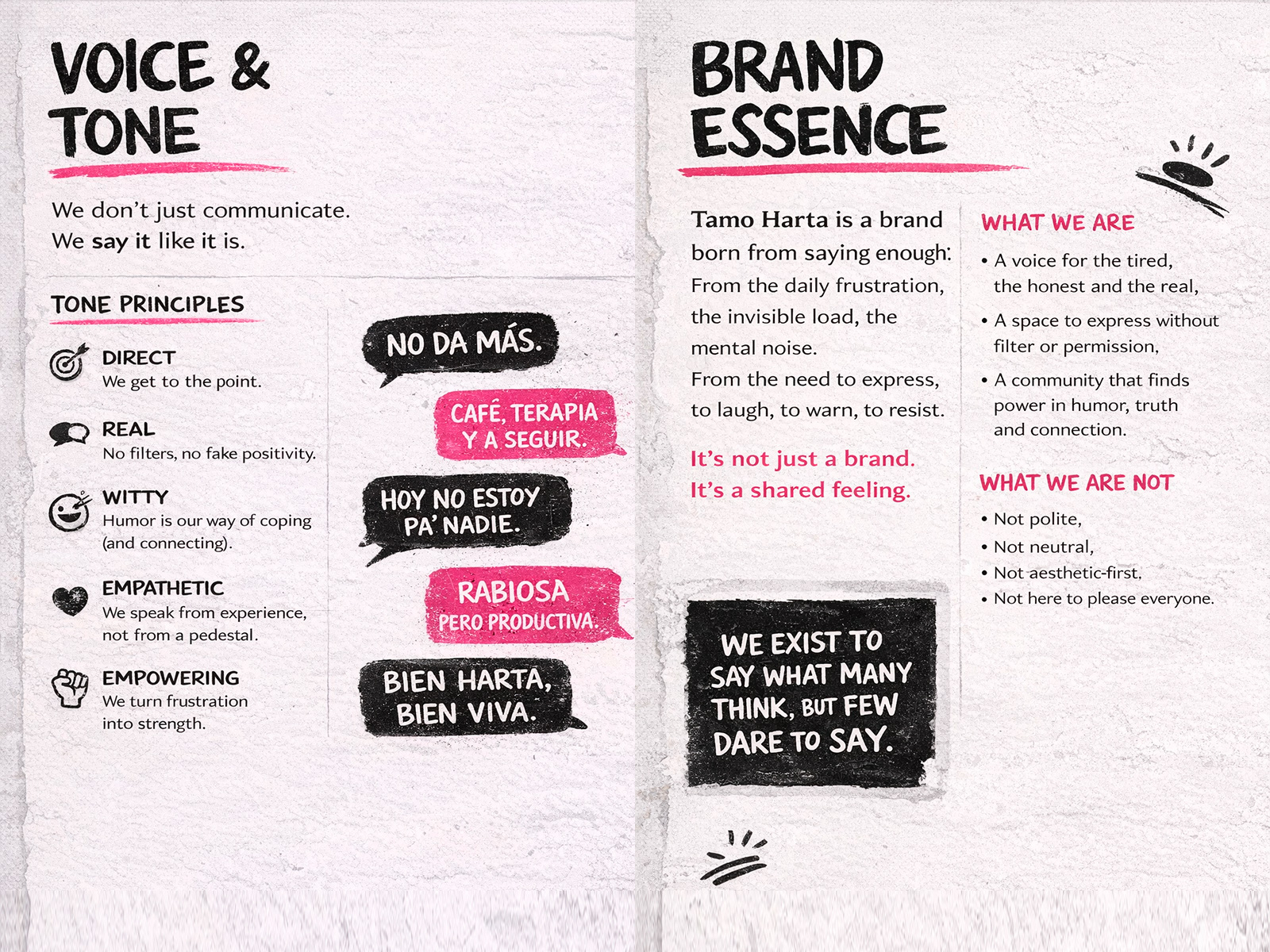
Voice & Tone / Brand Essence — five tone principles with real examples, and the brand positioning: what we are, what we are not.
Finding the right mark
Initial concepts were sketched by hand to define the direction, then taken to digital to explore typography combinations. Several typefaces were tested and unified into a single custom style. The first direction, a calligraphic script, was discarded for being too decorative for a brand that values directness over polish. Subsequent iterations tested a monogram and two block lettering approaches with different proportions, arriving at rounded inline letterforms with an expressive flash detail that feels immediate and unpolished without looking amateur.
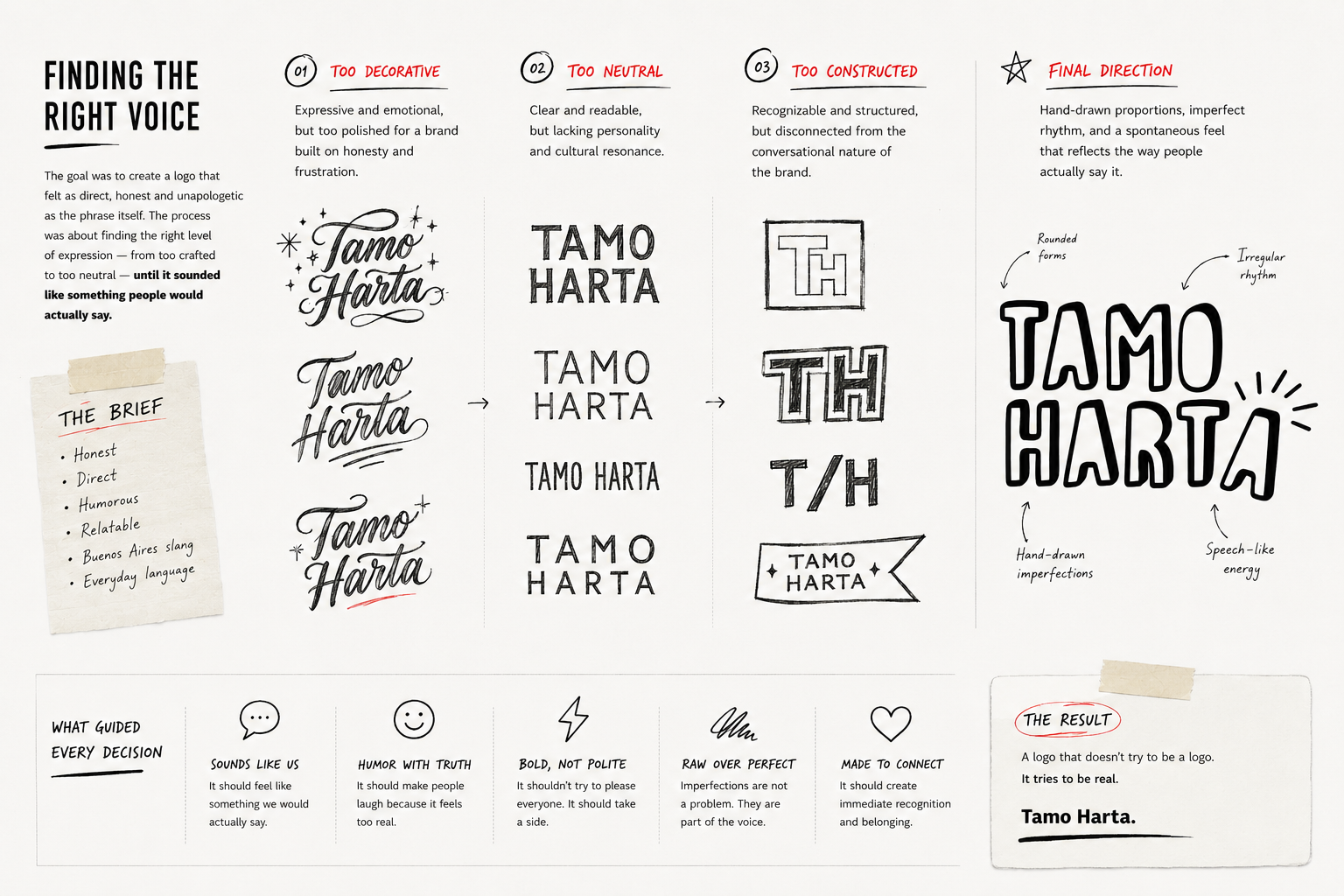
From hand sketches to digital explorations: four directions tested before arriving at the final mark.

The final logo — irregular, slightly distorted letterforms that feel immediate and unpolished.
A brand built on tone, not rules
The identity doesn't try to look polished. It tries to sound right. The logo itself reflects that: it looks like something you'd scribble when you're done pretending everything is fine.
The primary cohesion system is tone of voice: humor style, typographic treatment, and cultural references shared with the audience. Expressive typography, hand-drawn imperfections, and bold direct messaging hold the brand together across every application.
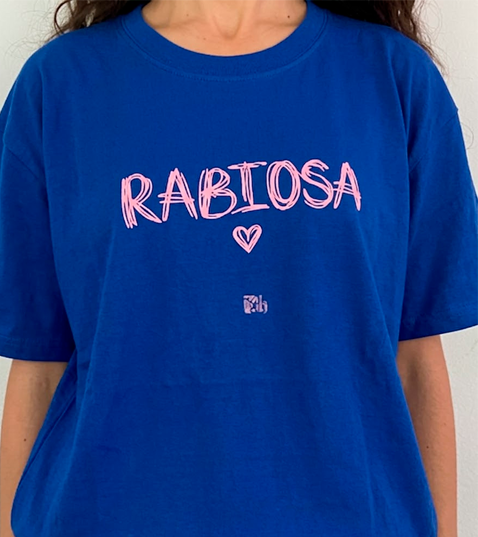
Minimal statement — a single word as the entire composition.
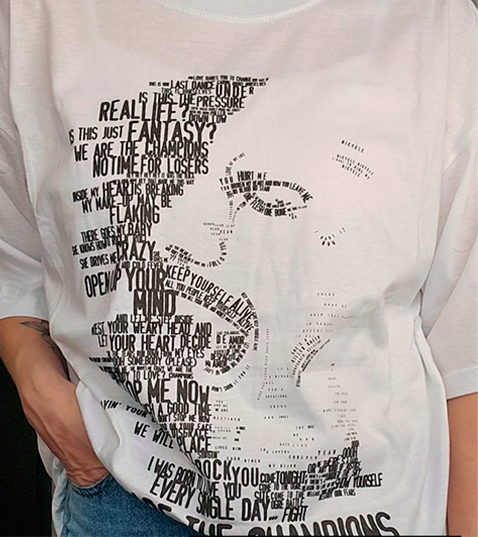
Dense typographic composition — text as texture, songs and Freddie Mercury portrait.
Language as a graphic resource
Each piece is built around language as the main visual element. Phrases become compositions, typography becomes illustration, text becomes texture. This creates a flexible system where variety comes from expression, while voice remains the constant thread holding everything together.
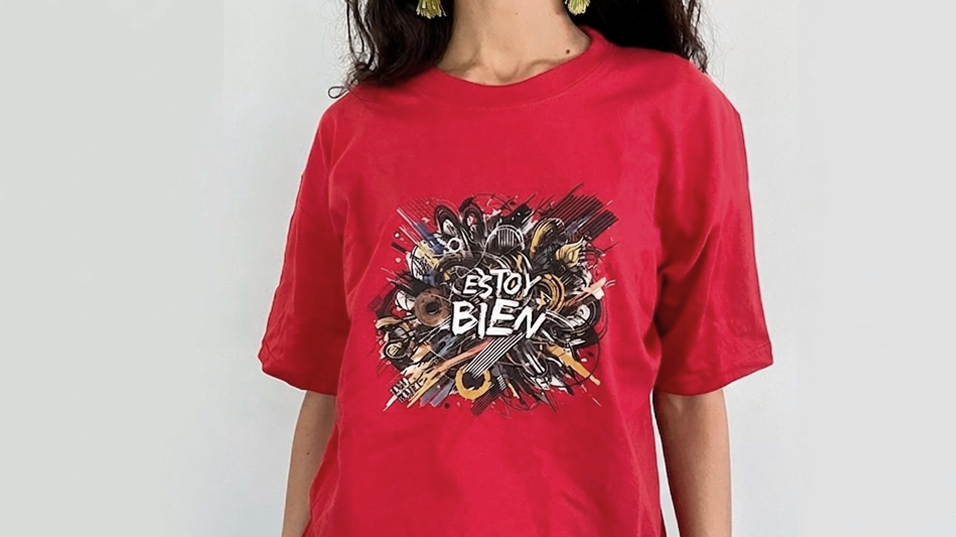
Character-driven design — the phrase "Estoy bien" (I'm fine) wrapped in visual noise that says the opposite.
A complete brand identity system
The visual execution was documented in a full brand manual covering brand essence, voice and tone, color system, typography, logo variants and incorrect use, graphic elements, layout principles, visual language, and applications across social, merchandise, print, and packaging. The manual itself follows the brand's visual language: raw, expressive, and built to be felt, not just read.
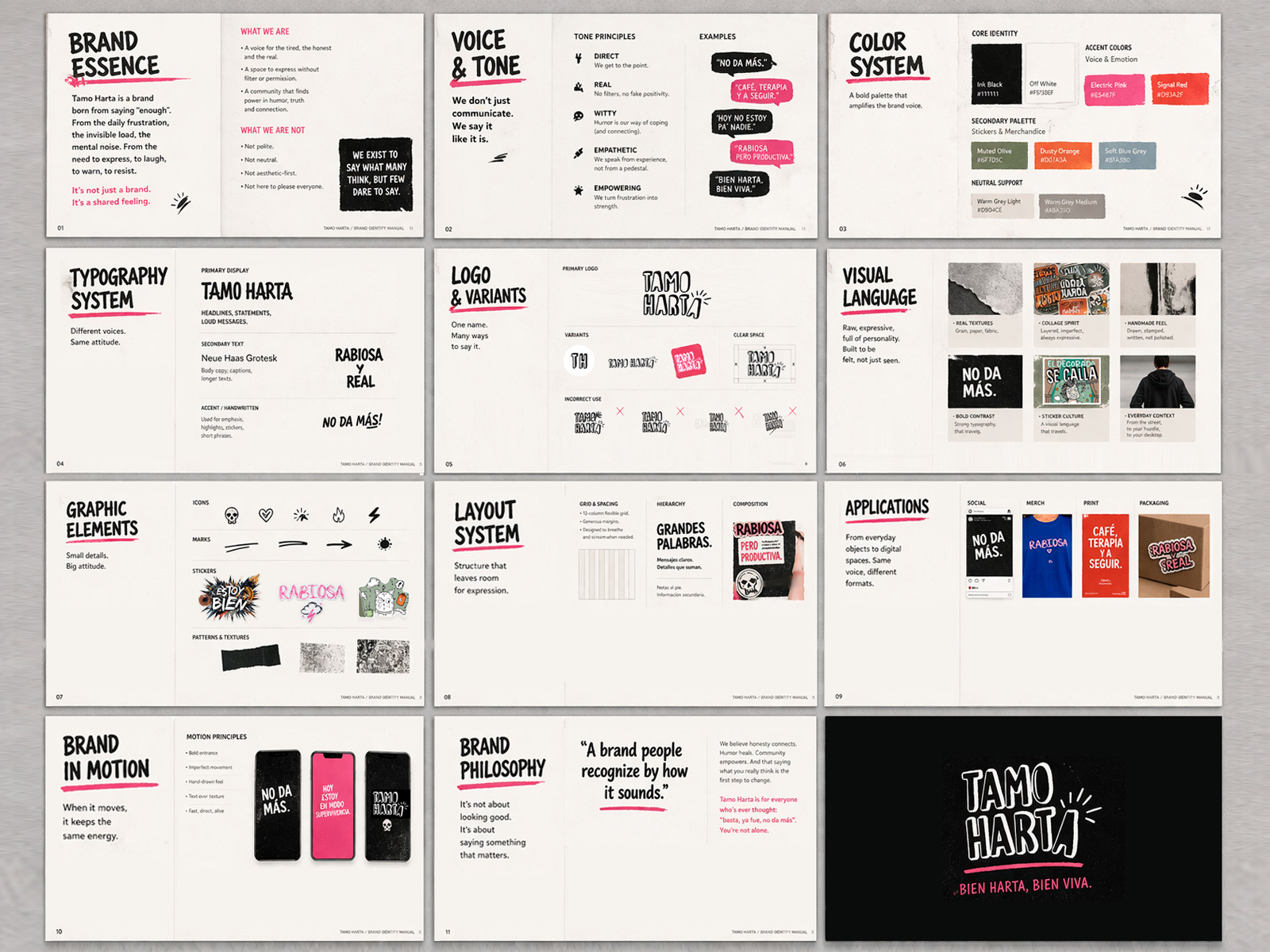
Brand identity manual — twelve pages covering the complete system, from brand philosophy to motion principles.
Designed to live in the real world
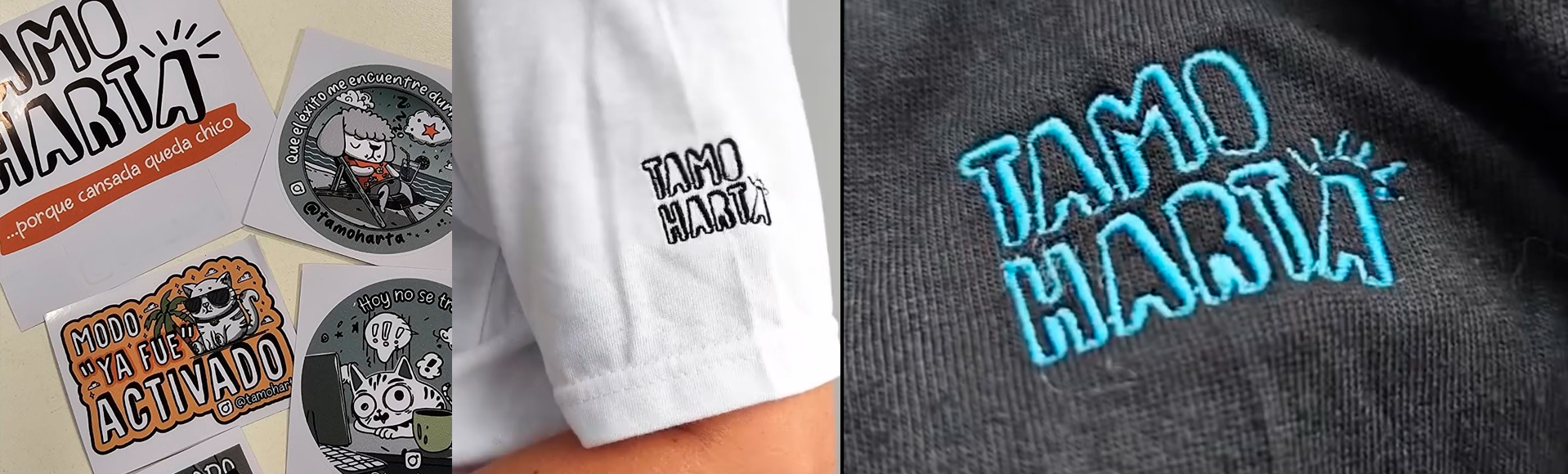
The identity extends across physical products and small-scale artifacts. Rather than mockups, the project is documented through real usage — how the designs actually behave on garments, packaging, and in people's hands.
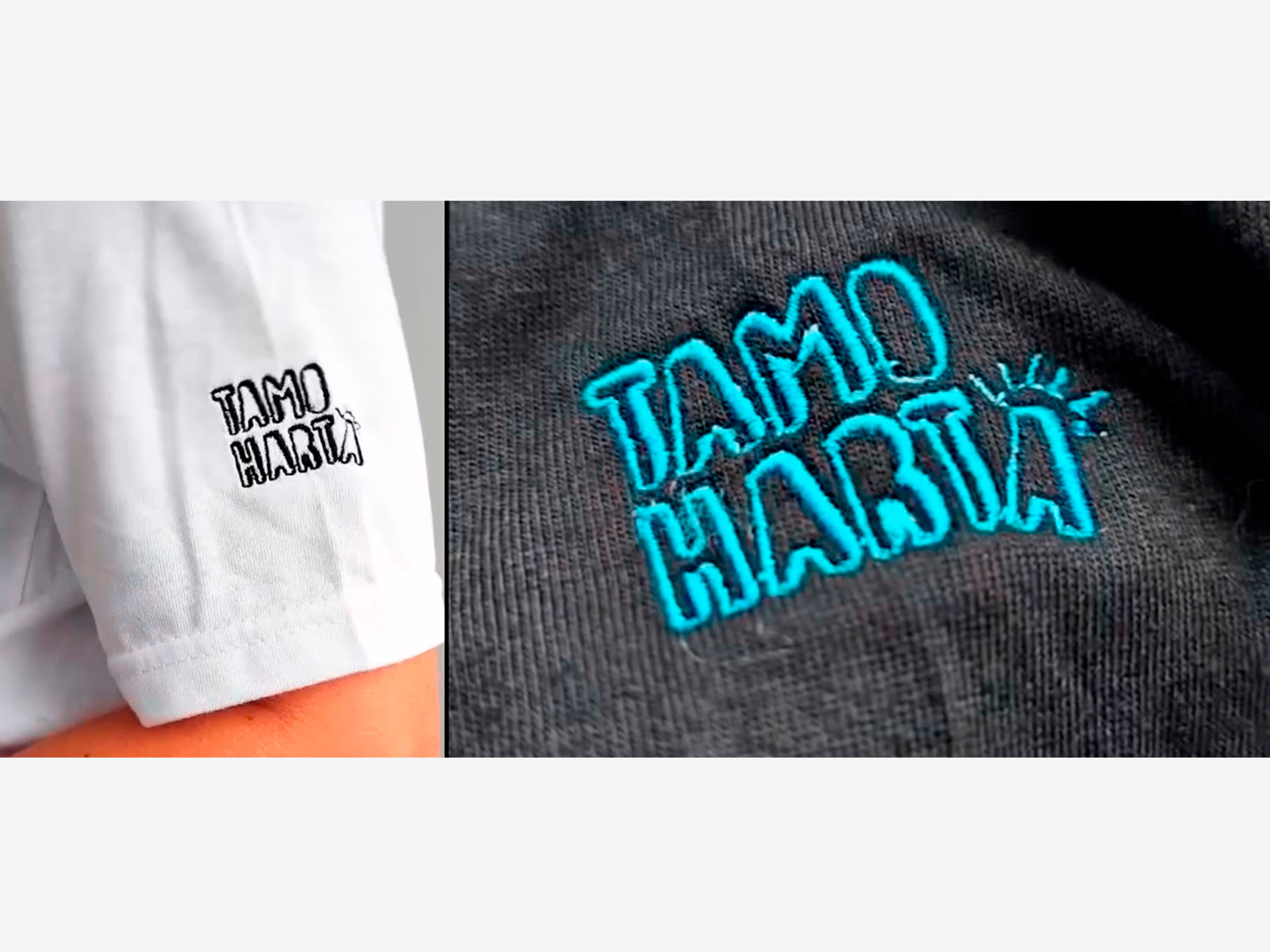
Logo placement on the sleeve was a deliberate decision: a bag, a jacket, or a backpack covers the chest. The sleeve stays visible. Embroidery was chosen over print to signal quality and permanence.
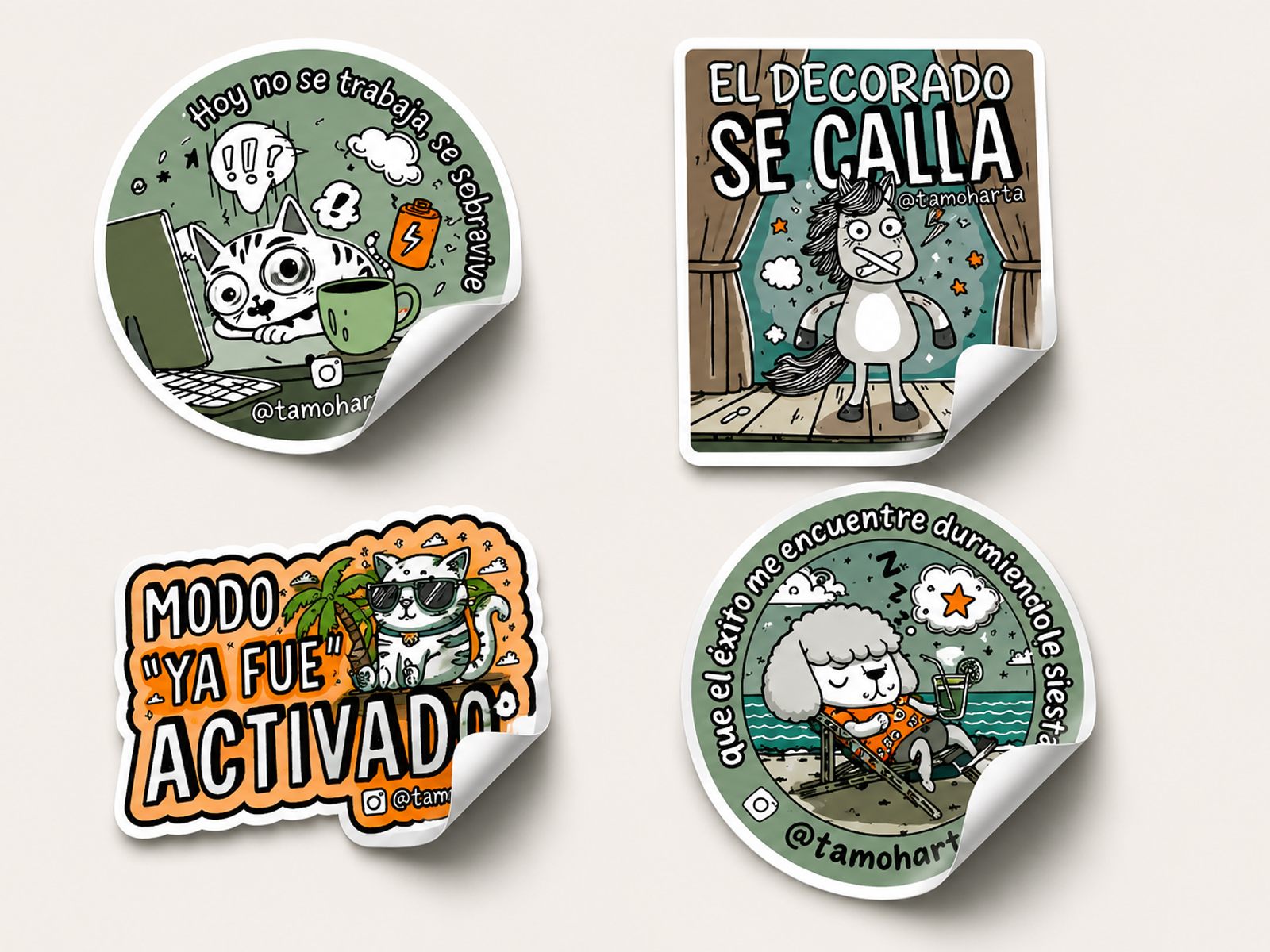
Sticker collection, portable expressions, each one a self-contained piece. Character illustrations developed from hand-drawn references, refined digitally to match the message of each design.
A brand people recognize by how it sounds.
Tamo Harta doesn't rely on visual uniformity to be recognizable. Identity comes from voice, attitude, and cultural resonance. Launched organically through community channels with immediate resonance, validating the strength of the brand’s voice, cultural relevance, and emotional clarity without paid promotion.